

By Denyce Graves
Header image: Denyce Graves as Carmen; Dan Rest/Lyric Opera of Chicago.
As I stand in 2026 reflecting on my longtime relationship with Carmen, I am profoundly aware that this opera is far more than a classic work of art; it is a living embodiment of freedom, defiance, and the courageous assertion of identity. Playing Carmen across decades has been both a professional gift and a personal journey that continually teaches me about strength, resilience, and the power of authenticity. Carmen’s iconic opening “L’amour est un oiseau rebelle” is a call that has echoed in my soul since I first sang it. It speaks to something fundamentally human: the yearning to love and live without chains. Carmen does not seek permission; she does not negotiate her desires. In a world that often tries to silence or confine women, especially women of color, Carmen’s rebellion is a radical act. She owns her freedom with pride and refuses to be tamed, a lesson that remains urgent and vital in 2026.
One of the most striking things about Carmen is her steadfastness. While others around her undergo profound change (Don José falling from grace, Escamillo parading bravado), Carmen holds firm to who she is. This constancy is an act of defiance in itself: She lives and loves on her terms, unyielding even in the shadow of death. That unshakable agency is something I have always found inspiring, especially as a Black woman navigating the arts, where women like Carmen are too often forced to shrink or disappear.
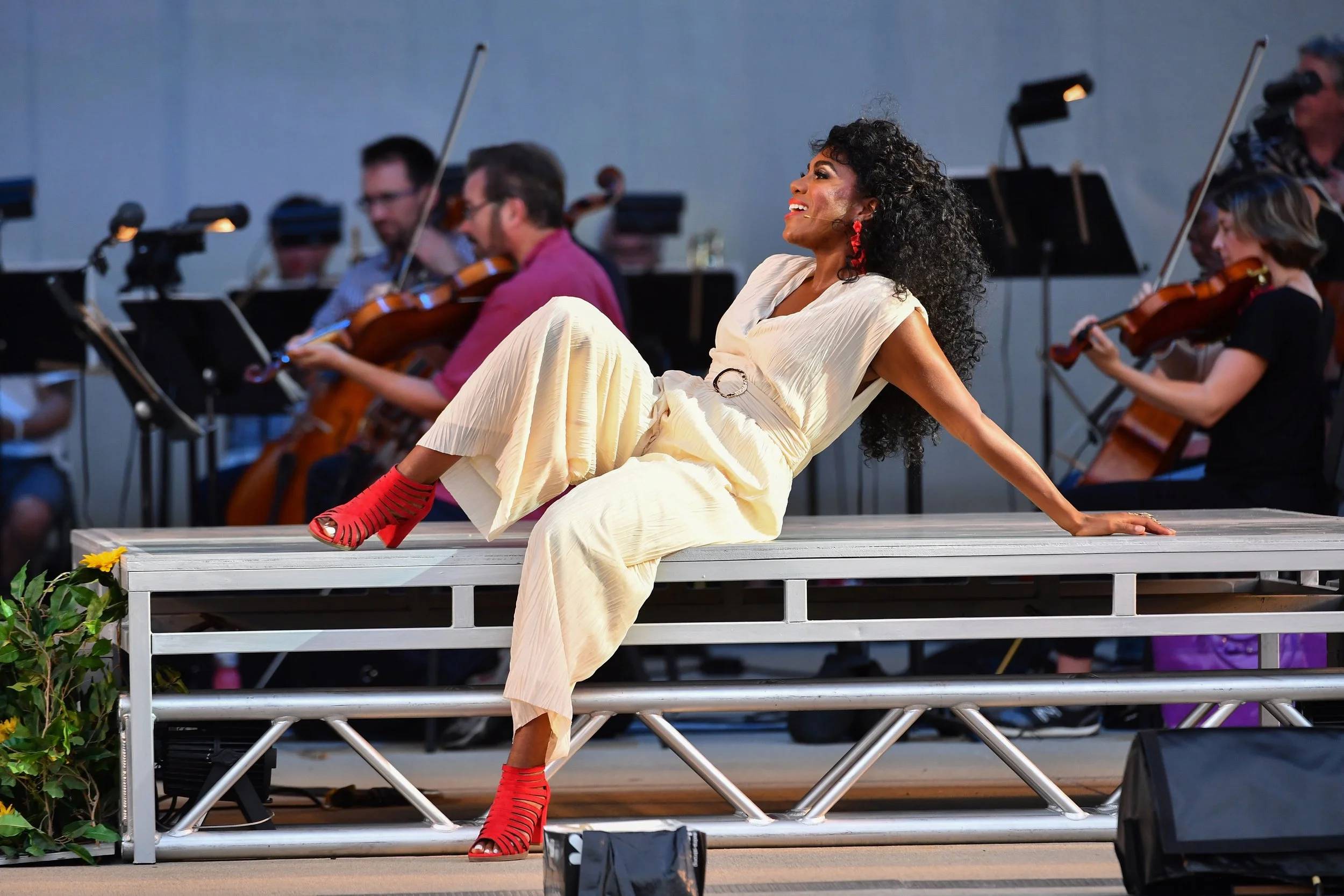
J’NAI BRIDGES in the title role of Cincinnati Opera’s 2021 production of Carmen at Blue Ash’s Summit Park. Photo: Philip Groshong.
I think often about Mary Cardwell Dawson, a true revolutionary, who founded the National Negro Opera Company during the 1940s, a period rife with exclusion and silence for Black artists. Her audacity gave voice and opportunity where none had existed, much like Carmen’s fiery spirit challenges societal constraints. Both women remind me that disruption is not to be feared but embraced; it is the path toward transformation and justice.
In performing Carmen, I have experienced firsthand how this character opens a space for dialogue about freedom, love, and the consequences of living authentically. Audiences respond deeply to her story, perhaps because it contains the contradictions of life: passion and pain, joy and tragedy, liberation and loss. In Carmen, we see the complexity of womanhood stripped bare, neither saint nor victim, but fiercely human.
As we move further into 2026, Carmen’s presence remains a crucial reminder of the importance of disruptive women. They are the ones who challenge norms, question authority, and inspire progress in every sphere of life. Carmen’s tale urges us to honor and uplift voices that refuse to be silenced, those who carve paths of freedom not in spite of the risks but often because of them.
This role has been more than a signature for me; it has been a lifelong teacher. Through Carmen, I have learned about the power of choice, the strength in vulnerability, and the courage required to live truthfully. Her story is far from static; it is alive with lessons for every generation. And so, I am grateful that Carmen continues to be sung, to be felt, and to remind us all.

Denyce Graves is a celebrated mezzo-soprano who has sung on opera stages around the world. She is founder of the Denyce Graves Foundation, which focuses on the intersection of social justice, American history, and the arts.