
by Kimille Howard
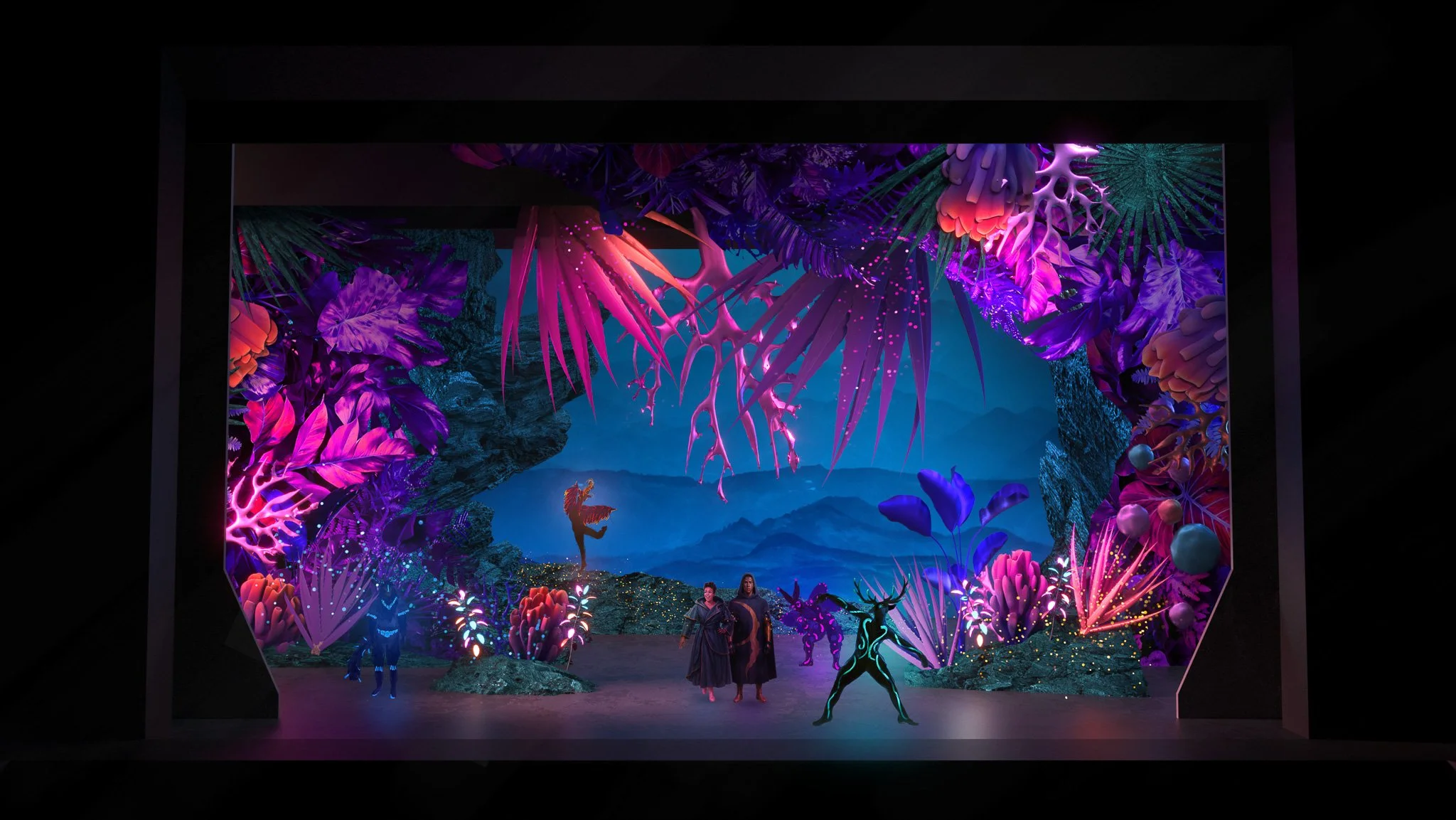
Header image: Scenic Design by Steven C. Kemp for Act II of Lalovavi
The genesis of Lalovavi began with one very important question: What story can we tell that will offer Black audience members escapism? I could count on one hand the amount of shows about Black characters I’ve experienced where I could leave the troubles of the world at the door. In an effort to fulfill this urgent need, our team was compelled to prioritize Black joy in a way that has never been done before in a grand opera. While brainstorming with our librettist Tifara Brown and composer Kevin Day, we determined that looking to the past or present for our story was not the solution. In order to create something completely original and beyond the influence of history or society, we chose to look to the future—400 years from now, to be exact. Armed with Black-American Afrofuturism as the theme and no limitations beyond our own imaginations, we began to dream big.
Inspired by mythology, dystopian worldbuilding, and Black and Indigenous American heritage, we began with a biodome city called Atlas built on the bones of old Atlanta. We soon discovered our burgeoning heroine with untapped power, Persephone, and our tyrannical villain, Titan, who is desperate for immortality. During the generative process, Tifara shared with us her studies on the secret language of enslaved African Americans called Tutnese, also known as Tut. This survival and communication tool was critical to the liberation of our ancestors. Tifara chose to honor them by making Tut the secret language of liberation for our rebels in Atlas. Lalovavi, which is Tut for “love,” is the first opera in history to include the Tut language. I hope audiences will be motivated to learn more about Tut after experiencing our production. The healing power and unifying force of love in its many forms is the heartbeat of this opera. Persephone’s love for her family, her people, and a new love interest is her motivating engine. She is forced to flee her gilded cage in order to survive, only to be thrust into a new and fantastical world full of strange creatures in a captivating, dangerous environment. While Persephone’s circumstances are extraordinary, the experience of adjusting to new places, people, and challenges resonates. I hope audiences will connect with her persistent search for identity and community in the face of adversity.
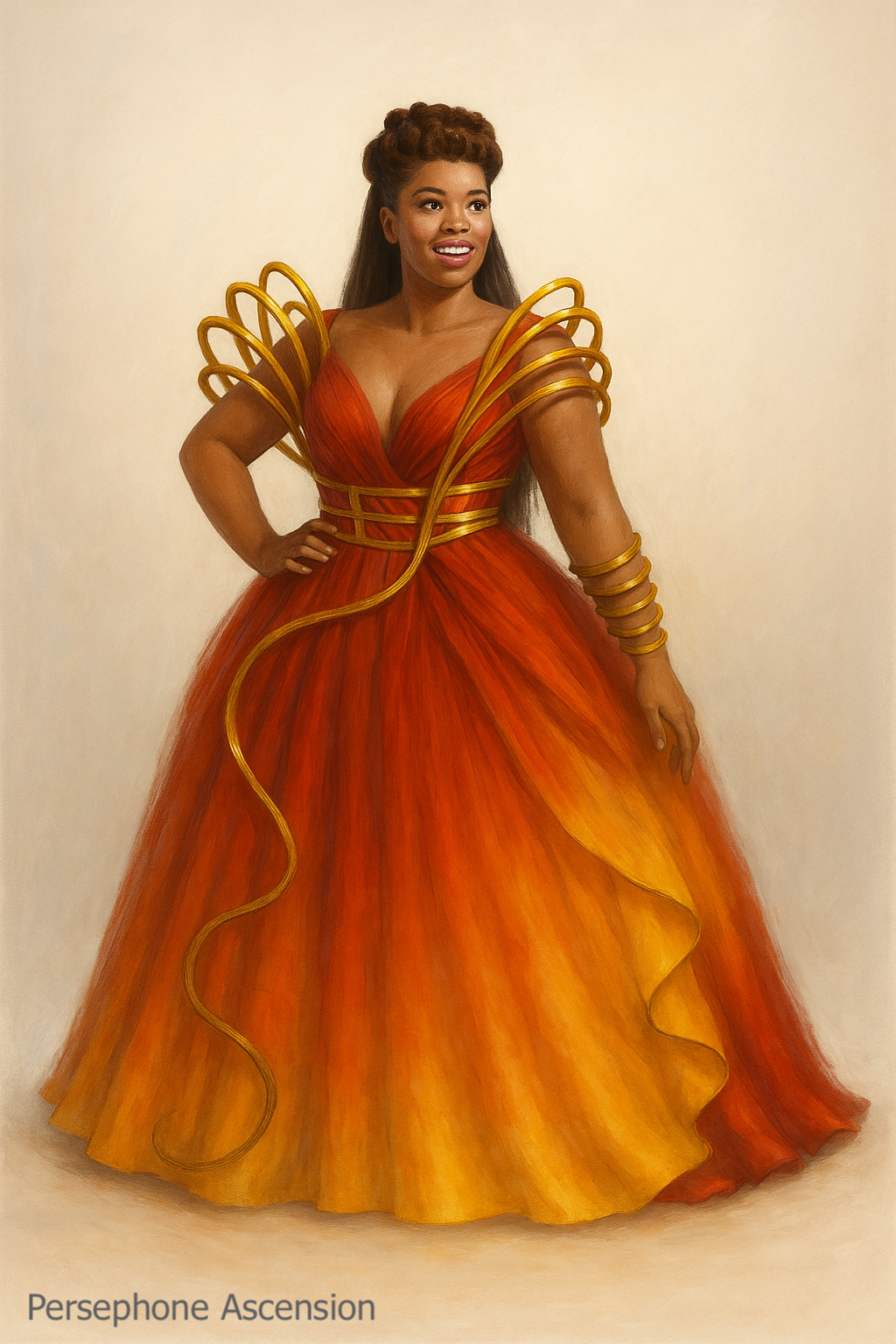
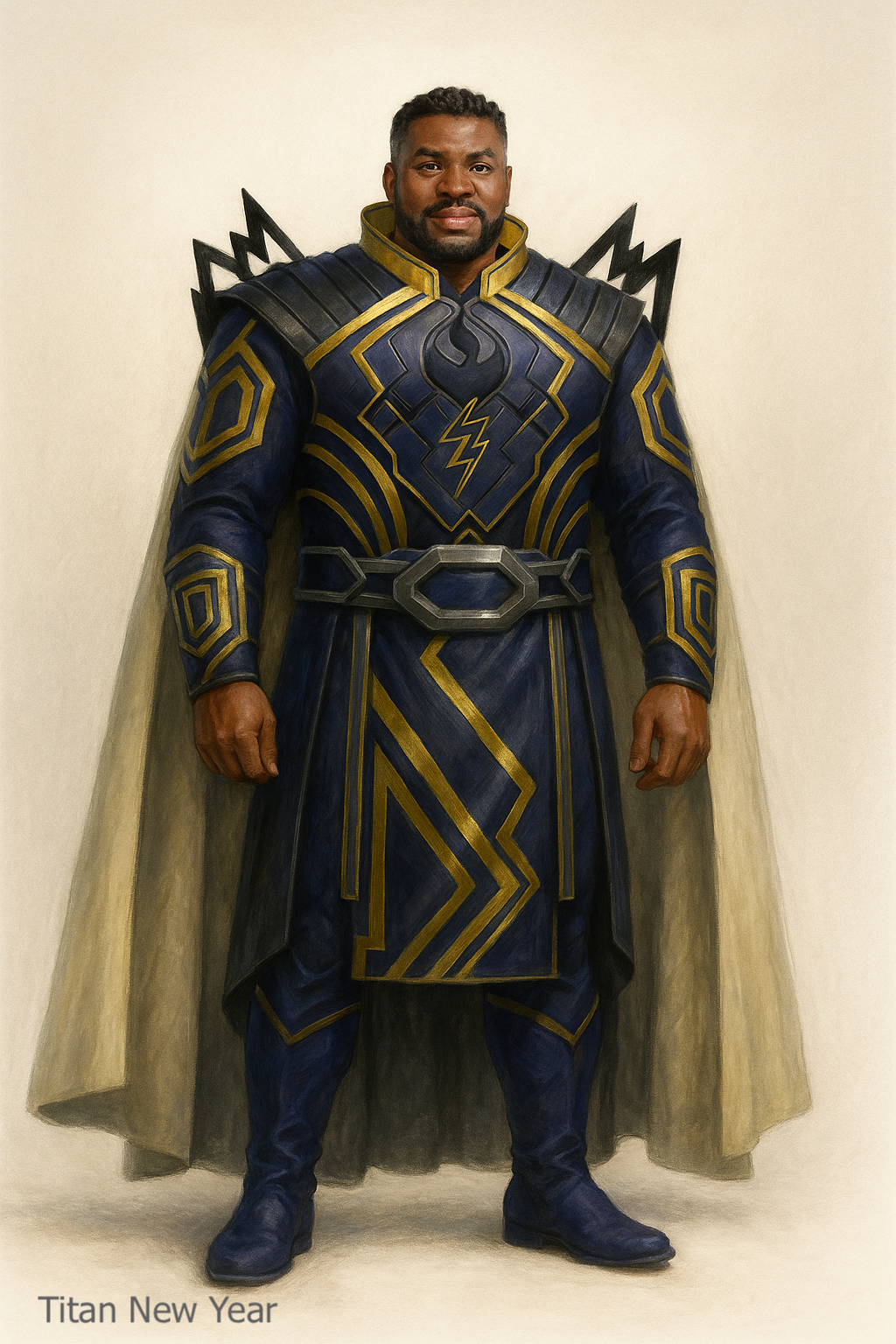
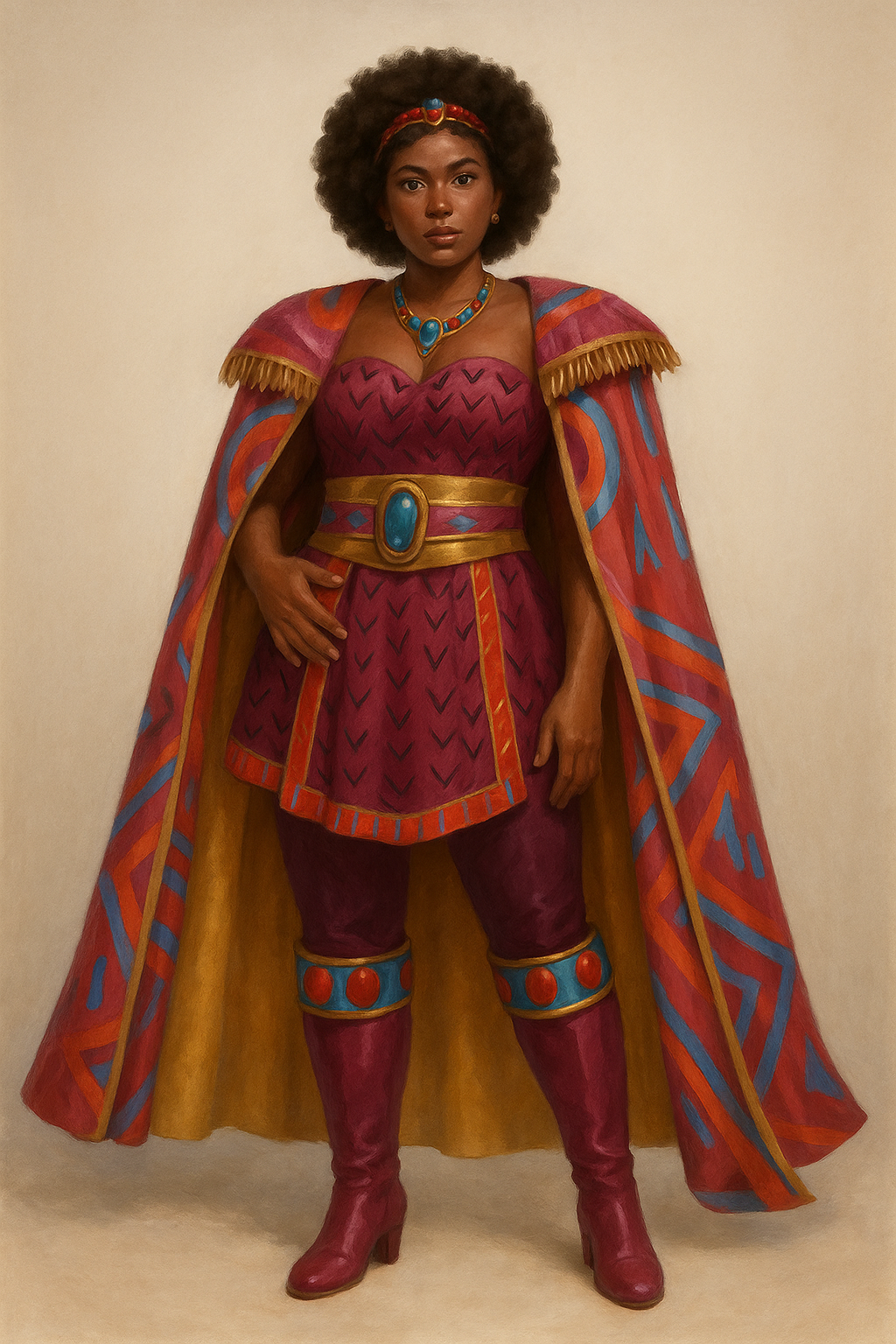
STORYTELLING THROUGH STYLE: Kara Harmon’s costume designs for Persephone, Titan, and Niamara.
It has been a life-changing experience getting to build Lalovavi with our phenomenal creative team, and I cannot wait for audiences to witness the gorgeous design elements of this new world. From bioluminescent forests to giant poisonous flowers to anthropomorphized bodies of water, folks are in for a sumptuous visual and aural feast. I’m incredibly proud of Tifara and Kevin for the beautiful story we’ve crafted together over many years and many drafts. Since childhood, I have always loved fantasy, adventure, and science fiction stories despite the absence of characters that looked like me. This production is a gift to those who long to see themselves as the heroine, the love interest, the prophecy, the receiver and giver of love. May Lalovavi be a catalyst for change in what stories and communities are centered on stage. May audiences walk away inspired, fulfilled, and excited for more. Lalovavi hasha-sus rut-i-sis-e-nun!
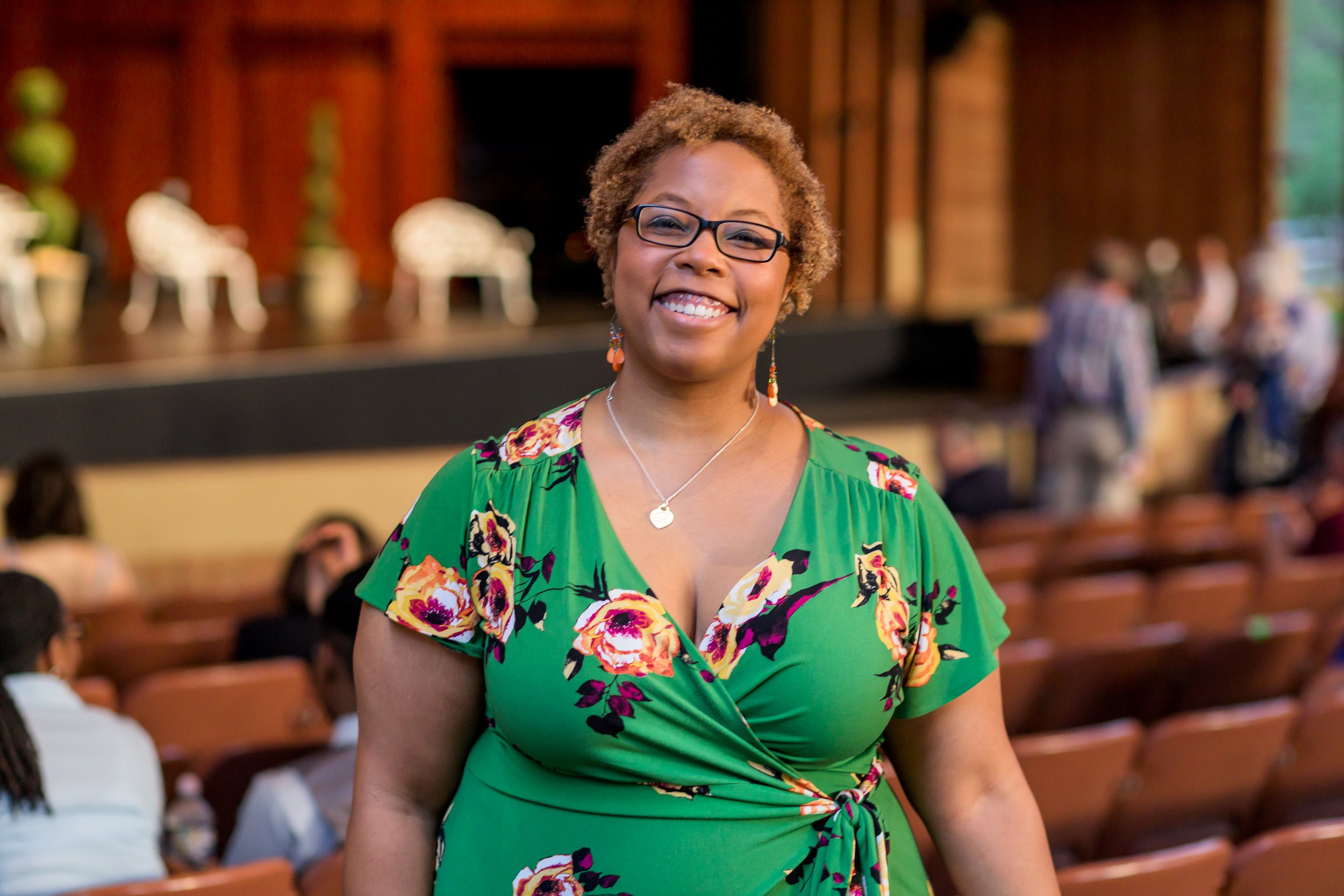
Kimille Howard is a New York-based director, deviser, writer, and filmmaker. She is stage director and dramaturg for Lalovavi.