
By Ricky Ian Gordon
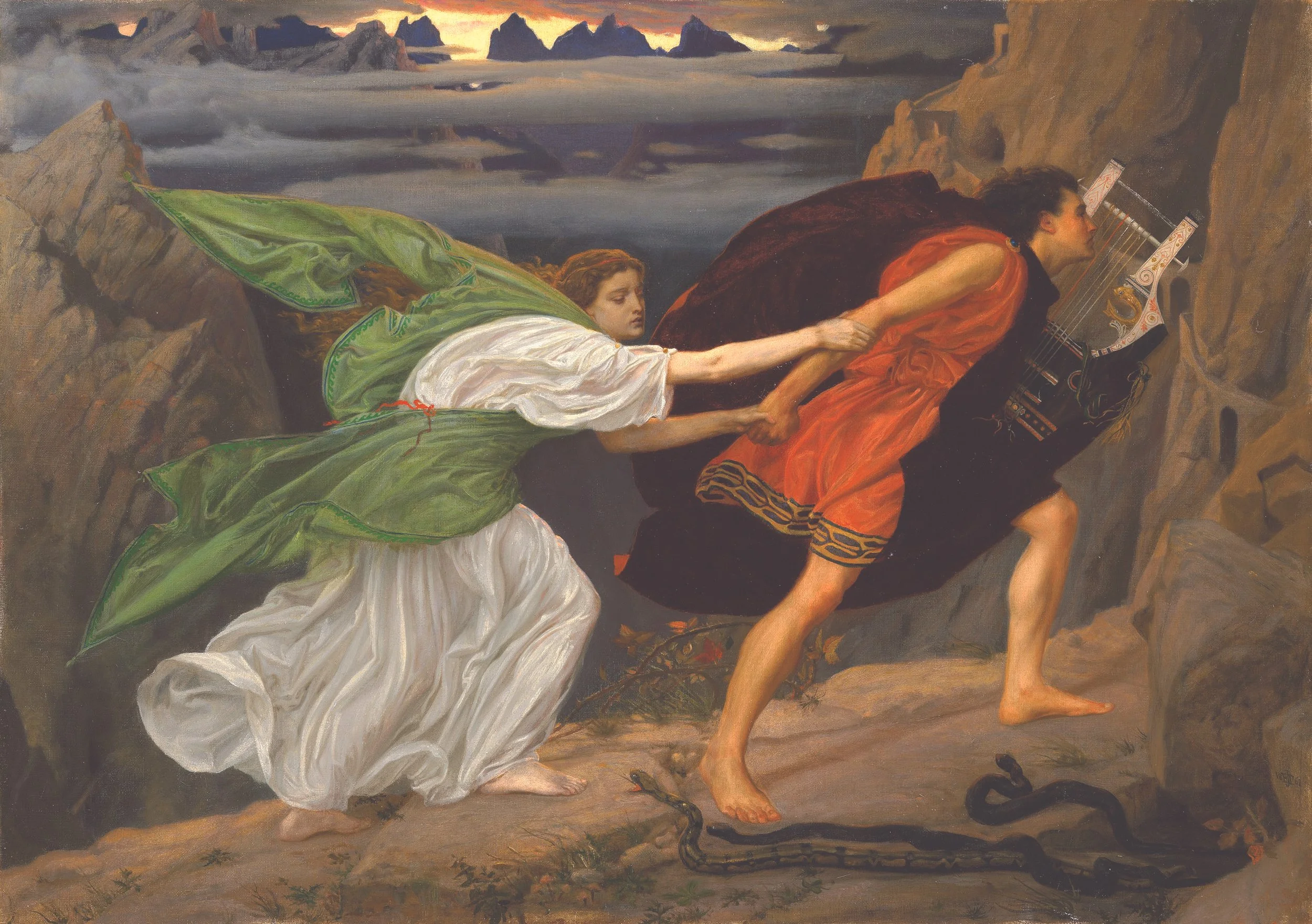
Header image: Inset of Orpheus and Eurydice by Sir Edward Poynter
When I was little, my sister took me to Marcel Camus’s beautiful film Black Orpheus with Breno Mello and Marpessa Dawn. What could I have really understood in that story? But I became quite obsessed with the myth of Orpheus and Euridice.
Orpheus, god of music, tames the sentient world to bow at the grace of his music. The only thing missing in his life is a partner. One day he meets her: Euridice, so beautiful she seems to float on a cloud. He becomes whole, complete, in love. Fate, however, has other plans. Euridice suddenly dies, and he goes to the underworld to get her back. A difficult plan is set in motion. She will follow him back to the world, but he cannot look back or he will lose her. Unaware of the plan, she thinks he is ignoring her. At a particularly painful entreaty, he carelessly turns back to assure her. She disappears, forever. Grief-stricken, his music becomes so sad that the creatures he used to bewitch become deranged by it. They tear him to pieces. Myth has it that when his head is cast into the water, music springs from it…all music. His loss becomes the world’s gain.
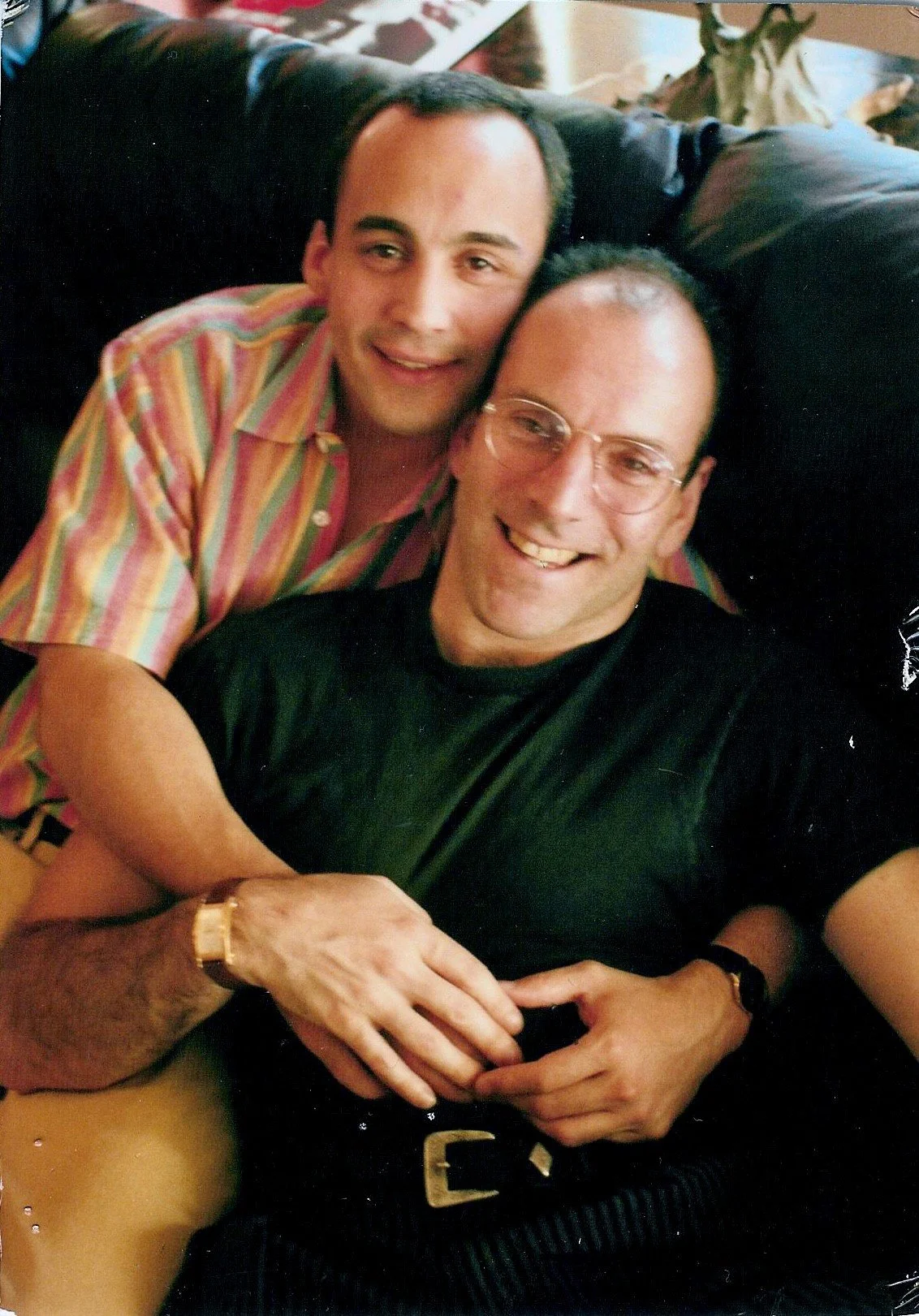
THE AUTHOR with his late partner, Jeffrey Grossi. Courtesy of Ricky Ian Gordon.
Flash back to many years ago, when I first met the celebrated clarinetist Todd Palmer. He became a frequent attendee at my performances. One day, he said he would like to commission a piece from me— something for clarinet, piano, and voice. I started musing on what it could be. In 1995, my partner at the time, Jeffrey Grossi, started to become very ill. What a maelstrom it is when someone is being taken from you incrementally and you are at a monumental loss of control. I felt almost deranged. Thus, it was not a particularly inspired time. I kept meeting with Todd about ideas for the piece, but essentially, I was rudderless.
One night, during a time of procrastination and exasperation, I woke at 4:00 a.m. with a vision. I rose from sleep, went to the dining room table, and wrote the entire text for what became my version of Orpheus and Euridice. It seemed I suddenly had a deep identification with Orpheus, only my Euridice was not bitten by a snake as in the myth, but robbed of life slowly by an incurable virus. I saw Todd as Orpheus playing his “pipe” instead of a lute or a lyre. Euridice was both herself and the storyteller. The notes belonged to Orpheus, and the words belonged to Euridice. When I was done, I had created a two-act structure which seemed very clear to me. Act 1 was about the birth of love, and Act 2 was about the birth of art through suffering. Jeffrey woke at 5:00 a.m. from the strange energy that had taken over our apartment. I read the text to him in a sort of sweaty amazement. I called Todd at about 8:30 a.m. to share my great news, and he ultimately encouraged me to stay the course.
Is that why we are taught myths, so that later on when we need them, we can tell our own stories through them? Is that how they came about? At that moment in my life, it is as if, knowing this

Ricky Ian Gordon is a prolific composer of vocal music that spans art song, opera, and musical theater. His memoir, Seeing Through: A Chronicle of Sex, Drugs, and Opera, was released in 2024 by Macmillan Publishers.