
By Kweku Diaw
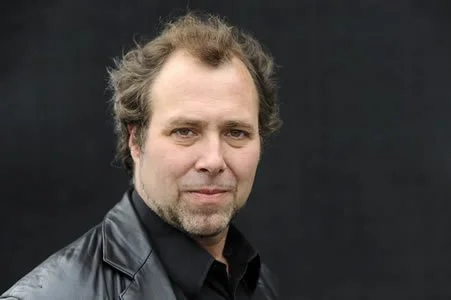
Thomas C. Hase
“I was informed that you have spent 30 years with the Opera.”
“Yes. This is officially my 30th season.”
“That’s amazing. Well, for that reason, the story is going to be called 30 Seasons of Light.”
“Very nice.”
Those were my first few words exchanged with Thomas C. Hase, Cincinnati Opera’s lighting director and resident lighting designer, who has designed productions with the company for the last three decades as well as all over the world. But who is Thomas Hase? And how did he find himself in the world of opera? These and many other questions are answered as we chatted about his journey and his 30th anniversary with the company.
Out of Darkness into Light
Hase grew up between Germany and the United States as an idealistic and energetic kid. He started working on anything light-related while in high school in Madison, Wisconsin. It proved to be a pivotal time in his life. Hase had to join the choir to work with the stage crew—the only way he could gain access to working on lights.
“Madison was a hotbed of lighting design because you could say there was an emergence of second-generation light designers,” said Hase.
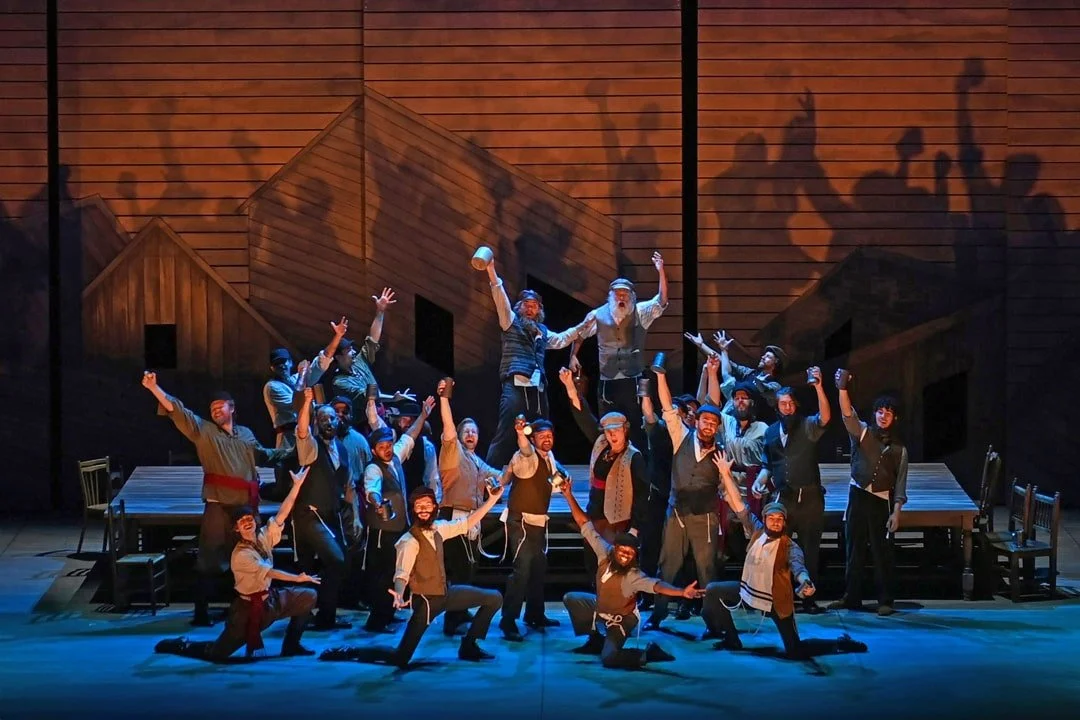
Cincinnati Opera’s 2025 production of Fiddler on the Roof featuring lighting design by Thomas C. Hase
Photo: Philip Groshong
He ended up attending the University of Wisconsin and studying under Gilbert Hemsley, resident lighting designer for the New York City Opera at that time, whom Hase considered “legendary.”
He recalled, “Gilbert wouldn’t actually let me major in theater, believing that languages and history were important to study in order to be able to discuss world literature.”
Hase took every course that Gilbert offered, in addition to getting a degree in both history and German literature.
Fast forward several years, Hase found himself in Europe taking many lighting design gigs to make a living. For him, a lighting designer represented the perfect merger of technology and art.
Said Hase, “We’re like artists. We paint, but our brushes are our lights. Our palettes are the colors that we can put in front of lights for the lights to emit. A wise man once said, 'When the curtain goes up, you don't just want to hear the music—you also want to see the music.”
“Art and collaboration in life have taught me always to have hope.”
This type of thinking set him apart in the world of lighting design, and he built a reputation for delivering true artistry. After plying his trade overseas, he relocated to New York City, where he worked with a number of partners, including the famed Ping Chong and Company. Hase recalled it had “a membership of about 30 people, and I was the only white person.”
“That's how diverse this company was,” he continued. “We toured the world to put on shows, and because of how diverse our group was, every trip was home away from home because someone knew the terrain and the land.”
As he continued his work in New York, Hase was approached by Robert Tannenbaum, the youngest and only American General Director of Germany’s Stadttheater Giessen. Tannenbaum invited Hase to be the artistic director of the theater’s lighting department.
“It was quite the portfolio we put together,” recalled Hase. “16 premieres in any one season, 62 productions over the course of the year. We could get called up at an evening’s notice. We ran 385 performances a year.”
Coming to Cincinnati
Amidst that work, Hase met Nicholas Muni, an opera director who eventually became the artistic head of Cincinnati Opera. In short order, Muni recruited Hase to Cincinnati to become the company’s lighting designer. Since Cincinnati Opera operated in the summer while other theatrical organizations around the city were dark, Hase early on brokered a “co-use agreement,” allowing the companies to borrow equipment from one another. Hase then convinced the Opera to invest in specialty gear, including bringing the first moving lights to the city, elevating the stock of tools available to all the collaborators.
But the most important thing that won Hase over to Cincinnati Opera was the crew.
“I came into the hall, and the crew was simply amazing,” he recalled. “I have a delightful relationship with them, and I wholeheartedly think they are the best crew in the United States. There's no challenge that they're not up for. And because of that, I find myself pushing myself to make the very best design possible.”
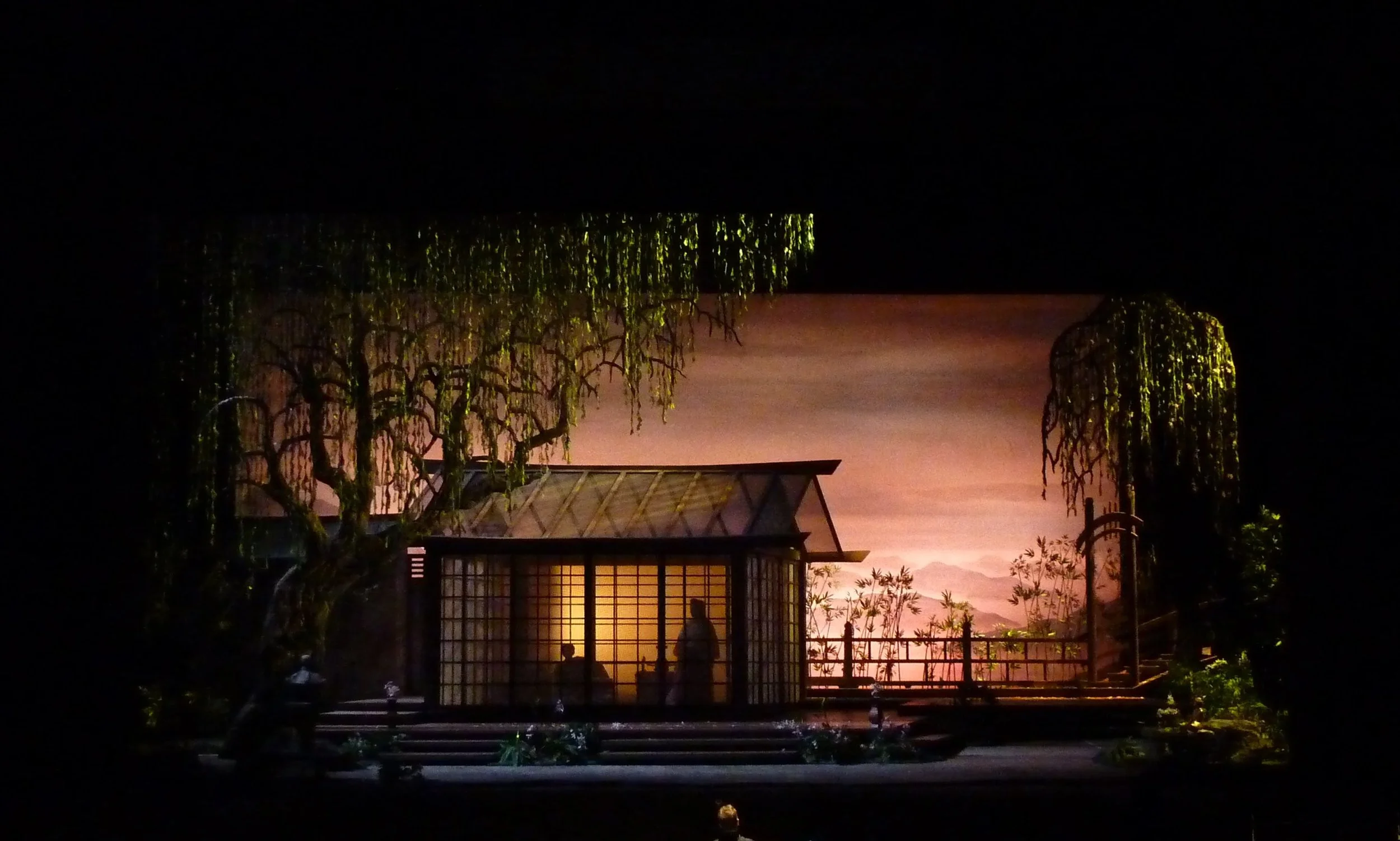
Madame Butterfly
Photo: Philip Groshong
As a thank-you to his hardworking colleagues, Hase decided to revive a tradition from his Wisconsin childhood--importing good sausages from Sheboygan and throwing a party. The event has become a beloved staple of every Cincinnati Opera season.
“It’s a pretty nostalgic thing personally because my dad would grill those sausages on very special Sundays in the summer,” he said. “My gesture to say thank you was doing that.”
Another initiative Hase helped establish was Cincinnati Opera’s lighting internship program. He recounted how, in his first seasons, he was renting equipment from a light rental company in New York in collaboration with his friend, John Frautschy.
“As the fees in those early years were low, I asked John if he wanted to drive the truck down [from New York] of lighting rental equipment to give him a little extra cash,” said Hase. “And he agreed. We did it for several seasons, and I realized we can’t keep doing this alone.”
He continued, “We discussed this with Glenn Plott, then director of production, and were able to get an assistant. Then after several seasons, it occurred to us that we could start teaching people design. We broke the assistant position into two paying internship positions. We decided to call it lighting internships, put the word out, and got 300 applications immediately. It has continued every season thereafter.”
The success of that initiative laid the groundwork for engaging interns in every facet and department of Cincinnati Opera. In recent years, the program has expanded to include high school trainees from the School for Creative and Performing Arts, who spend a short stint with Cincinnati Opera over the summer to observe the inner workings of the company.
Process and Work Ethic
What has made Hase stand out in his field is his boundless creativity combined with fearlessness. His employers have appreciated that this is the very reason they hired him.
“I think once you do a piece of literature or theater several times, you start getting a little bit more insight into it,” he said. “This particular Salome we did this summer shows a lot about the abuse that Salome went through. It’s very clear when you do the piece the first time, but this showing tried to emphasize it in a more pronounced way. So, then you get new insights, but more importantly, you grow as an artist between point A and point B.”
For Hase, there’s always room to grow. It’s very noticeable when there are challenges on stage or during production.
“There are several ways something can go off,” he said. “One is that you try to execute a design that you conceive, and the equipment fails. Another is you’re trying to put together your light plot, and it can’t be executed for various reasons. I think at that point in time, you’re also doing a lot of creative rethinking. We spend a lot of time tuning lighting drawings with feedback from both the company as well as the electrics staff, making necessary changes far in advance.”
The Man Behind the Light
When asked which of the more than 100 Cincinnati Opera productions he worked on stands out the most, Hase indicated that his favorite was his first: Donizetti’s Lucia di Lammermoor.
“That’s what I started with, and it was very raw, unexpected, and a great story.”
He also has a cherished memory attached to this particular production.
He recalled, “We were having this party after the whole show was done, with everyone in nice clothing and dressing. I was fatigued, short on sleep, and hungry. This nicely dressed woman comes up to me and says, ‘There’s someone who would like to speak to you for a moment when you get a second.’”
He continued, “So, I go over there, and this woman recalls that her husband worked tirelessly on one of the renovations at Music Hall to make sure that lighting could play an integral role. After witnessing the production, she realized that I was carrying on what her husband had been striving for. She handed me an envelope with a sizable check in it and said, ‘Give this to whoever should get it. It’s so the organization can procure more equipment.’ That woman was Patricia Corbett. That was something special.”
So after 30 years with the company, what wisdom has Hase found in the light to share with the world?
“Art and collaboration in life have taught me always to have hope. It taught me that hope is real. Those things that I thought we, as a group—electricians, the designers, and the entire production team—didn't think possible, could become possible with enough hope and hard work.”