
by Kweku Diaw
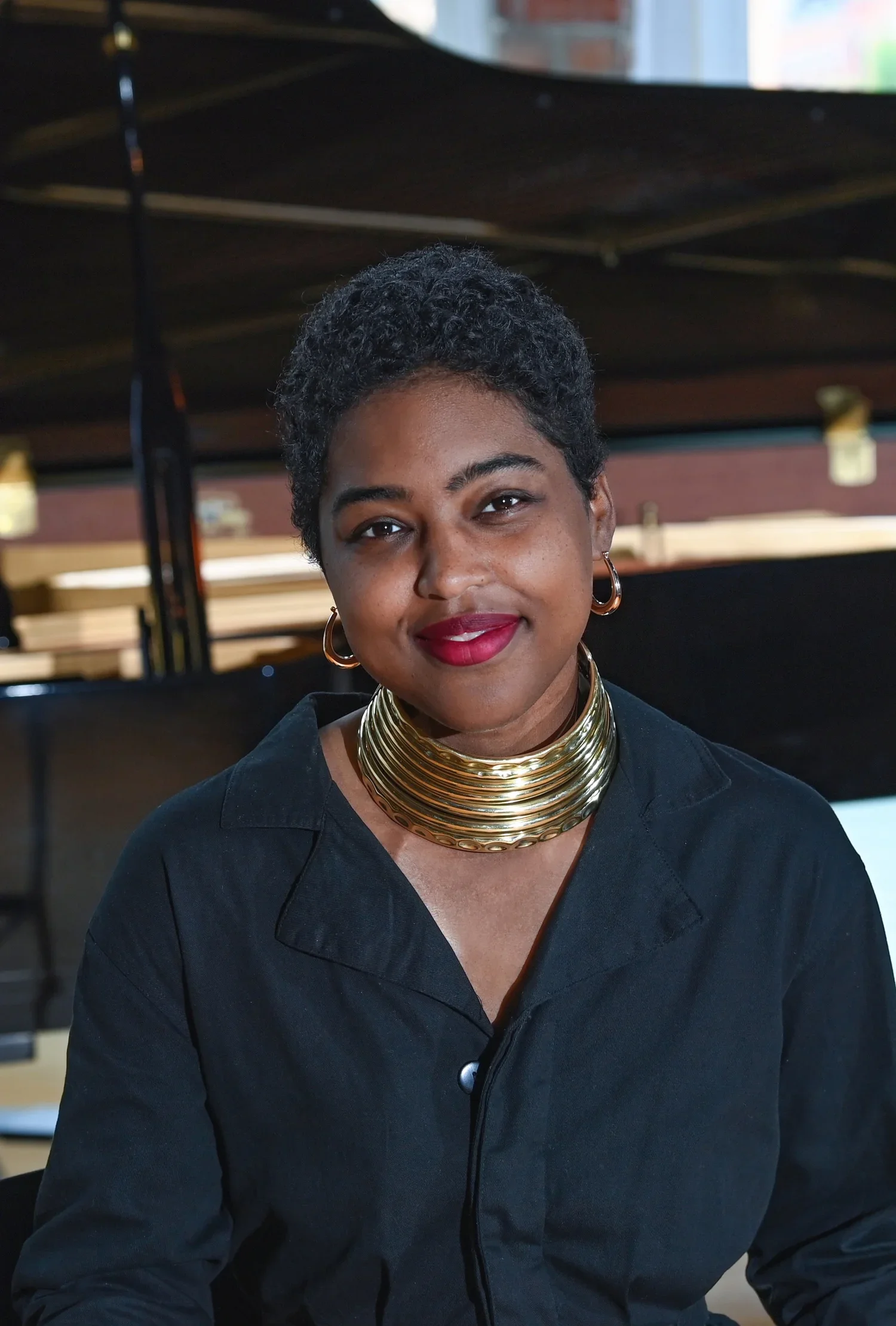
Tifara Brown, Lalovavi librettist
Photo: Philip Groshong
Poetic Roots
“I’m looking for that God to wash my sin, I mean skin, I mean sin away, I’m sorry, I can’t tell the difference anymore.”
“I’m looking for a tutor because I keep failing the brown paper bag test.”
These powerful words were written by performance poet and storyteller Tifara Brown, librettist of Lalovavi.
The oral historian and cultural strategist is a self-published author of the poetry book, Honeysuckle: Poems and Stories from a Black Southerner. Brown was raised in a small town in rural Georgia, adjacent to Southern Confederate culture. As a Black Southerner, Brown grew up navigating the tension between loving the beauty of Southern culture and being the descendant of Black people. Seeking an outlet to process her life experiences, Brown notes, led her to the doorstep of poetry.
“I got into spoken-word poetry at an early age, and I've been performing poetry since I was in primary school,” she said. “I started writing my first recitation when I was about nine. That was followed by competitive poetry in middle and high school before I started writing original poetry.”
Brown’s pieces notate her experiences and those of her family, friends, and community members. She has traveled all over the country and across the world, working with justice-impacted youth, providing them with the tools for creative expression as a means to help them cope with the harsh realities they may have lived through.
Telling Stories, Transforming Lives
“I am passionate about culture and storytelling since I’ve witnessed its significance in our communities and the legacy it preserves,” Brown explained in our interview.
Brown operates in a unique space, balancing multiple crafts and worlds. The girl from the South who started out with poetry has become an exceptional instrument of change—having a profound impact on her community and the spaces she operates in.
“I feel like I have just been moving, and everything was almost akin to a domino effect.”
As a culture strategist and facilitator, she focuses on providing methods of creative expression and developing environments for psychological safety within corporate organizations, arts institutions, and schools. Describing her craft, she stated, “I spent my weekends telling these stories, with teachers asking me to share those stories with their students. I started visiting elementary and middle schools to work with youth and share my stories with them. Then I started experiencing them telling me their stories, which happened to be some of the most powerful poetry I had ever heard in my life.”
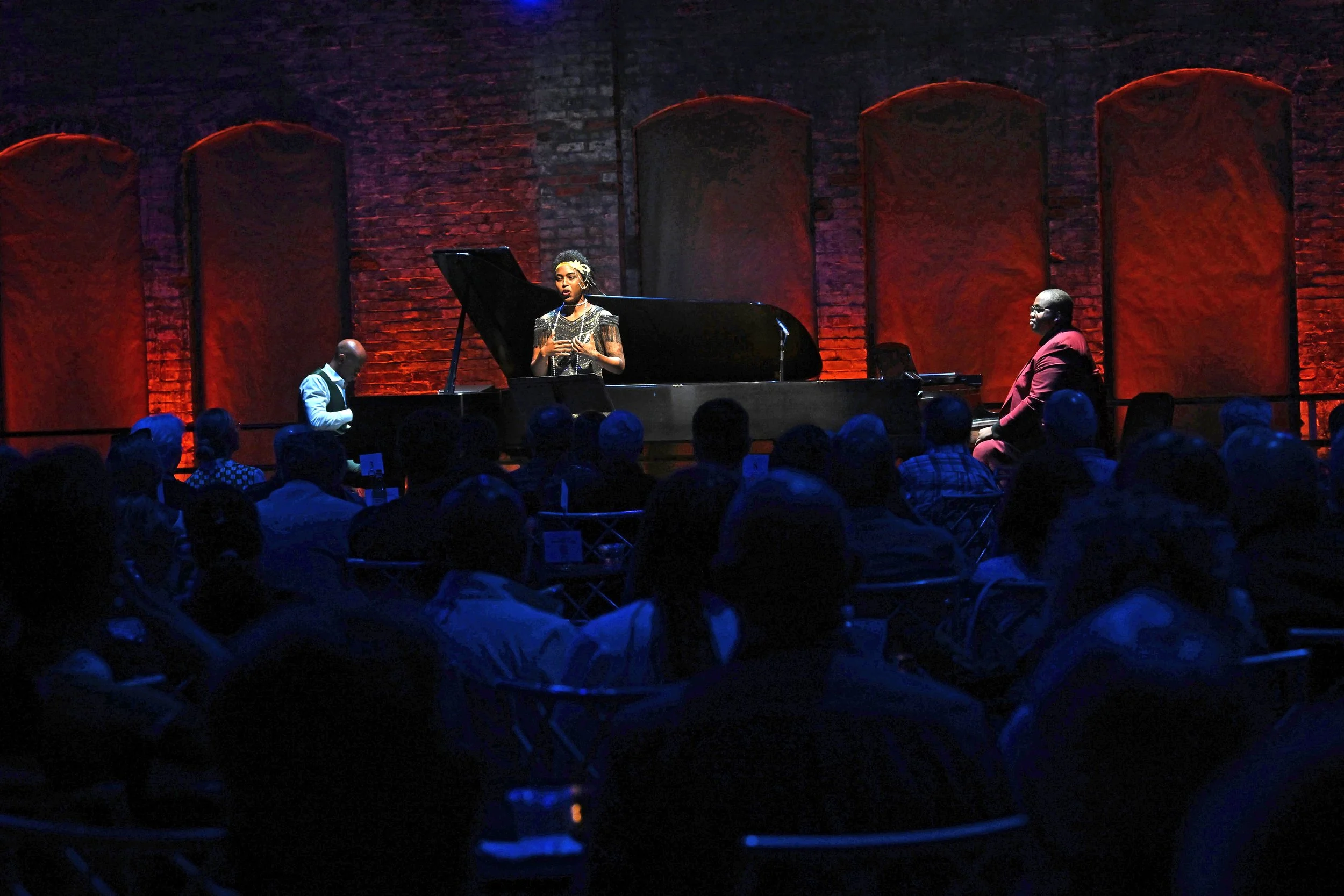
Tifara Brown (center) with pianists Kevin Miller and Kevin Day.
Photo: Philip Groshong
The realization that the young people she was interacting with had an incredible capacity for storytelling spurred Brown’s desire to teach them how creative expression could be a viable way of processing. The impact of this work led to her appearance on a TEDx stage. This elevated visibility provided Brown with the means to rally and raise awareness on community-related issues and justice as an activist.
Stepping into Afrofuturism
“For a thousand years, nebulas have never asked for permission to shine. Afrofuturism is not a costume; it is intergalactic calibration where memory meets imagination–power is born.”
Brown was exploring Afrofuturism without realizing she already had a place there. As a lover of literature for most of her life, she started reading Black artists and writers early on. She studied Toni Morrison, Octavia Butler, and the like—artists who had shaped culture by imagining Black worlds. She went as far as learning about West African folk tales, including that of the famed Anansi of the Akan religion. It never occurred to Brown that she was laying down the foundations to operate in Afrofuturism with her work later.
A research grant allowed Brown to travel to the Kofi Annan Peacekeeping and Training Centre in Ghana. There, she trained military personnel in gender policy and peacebuilding and studied oral traditions with griots. This was her first time leaving home and stepping onto African land. Brown felt welcomed from the very beginning—buoyed by the fact that her Jamaican heritage had roots in Ghana. She visited many tourist spots, including Elmina and the Cape Coast Castle, a slave castle that was built during the period of colonization. This would prove to be life-changing for her.
Her time in Ghana solidified her stance on culture and legacy. They primed her with the understanding to champion Afrofuturism.
Brown stated, “Afrofuturism is a vehicle for creating an environment where people feel safe enough and empowered enough to be able to architect their futures through an Afrocentric lens.”
As an artist, she wants more people to understand that Afrofuturism is accessible through stories such as Lalovavi.
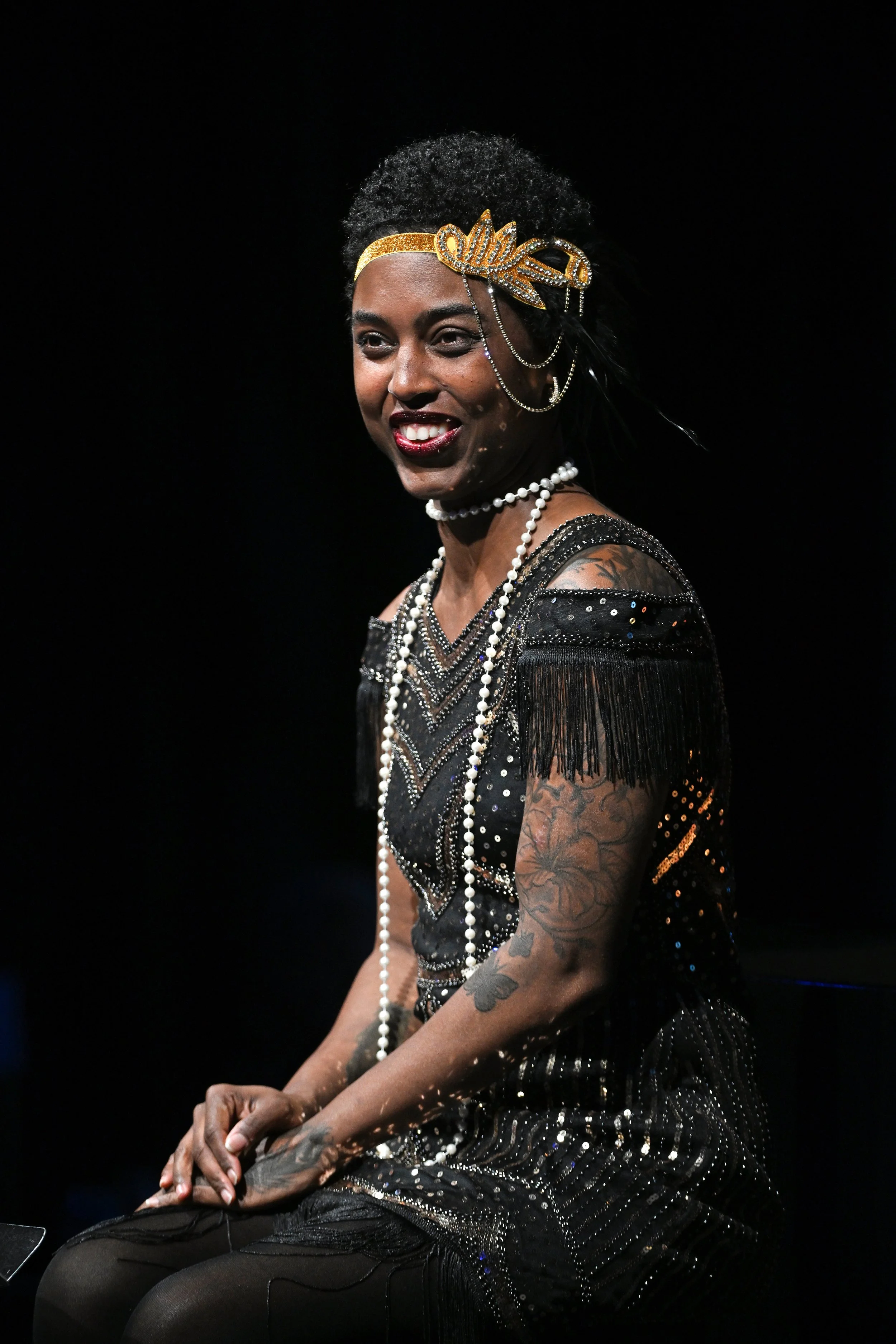
Tifara Brown, Lalovavi librettist
Photo: Philip Groshong
Walking into the world of Lalovavi
“I didn't set out to write an opera. I set out to tell the truth about what Black imagination looks like when it has no ceiling.”
A groundbreaking Afrofuturist opera that fuses rich musical textures with a bold future narrative, Lalovavi is the first opera to emerge from Cincinnati Opera’s Black Opera Project, a commissioning initiative dedicated to uplifting Black stories and creators. In opera, the core elements are the story and the musical composition. As the librettist, Brown worked on the story of Lalovavi.
The story of Lalovavi is that of Persephone, a princess on a journey to find herself and the truth of her past, eventually leading her to become the heroine needed to liberate the people of Atlas from Titan’s tyrannical rule.
For most people, when the word “Tut” is mentioned, the first thing that comes to mind is King Tutankhamun, a pharaoh of ancient Egypt. Tut, short for Tutnese, is a secret, spoken language and coded spelling system created by enslaved African Americans in the 18th century. In Lalovavi, it is the tongue of the rebels. The decision to use Tut in the story comes from Brown’s awareness of the generations enslaved in the South.
“I started studying Tut because I thought it to be very plausible that I had family members and ancestors that spoke this language,” Brown explains.
Brown studied Tut for almost a year before she even got the opportunity to be a part of The Black Opera Project, building on the work of Gloria McIlwain. McIlwain is credited with bringing Tut to mainstream media and stories, especially with her complete study of the language at Duke University.
“When I got The Black Opera Project opportunity, I didn’t start out with Lalovavi. I actually wrote a completely different opera, based on my experience growing up in the South,” said Brown. “But I was talking with our director and dramaturg, Kimille Howard, and our composer, Kevin Day, during a creative meeting for the opera. They liked the story, you know, and I wrote it in sincerity, but something hadn’t settled yet. What unlocked the missing piece was a mere thought of what if? So, with the language incorporated, I wrote Lalovavi in a week.”
Lalovavi represents stories Black children grew up reading and hearing, and in the same vein, the kind of stories Black people have wanted to see on stage that have not been written yet. That was an indicator to Brown and was a heavy inspiration for her writing. Creating a futuristic world, themed with Afrofuturism, was what she wanted to do.
Lalovavi’s impact in collaboration with the Community Open Dress Rehearsal (CODR)
For more than 30 years, the Community Open Dress Rehearsal (CODR) has been a unique opportunity for Cincinnati Opera to share the art of music with the community. This has been an integral part of the culture at Cincinnati Opera, and it retained a special place in the journey of Lalovavi.
In speaking on her work with CODR, Brown highlights her time at the Hamilton County Youth Center.
“We’ve done two workshops [there],” recalled Brown. “We worked with two classes of young men, introducing them to the world of opera, and shared the story of Lalovavi with them. This went ahead to blow our minds by producing several original rap songs, inspired by our workshop with them, about the Lalovavi story and from their own rap albums they’ve made. Because of that experience, the youth center wants to do more workshops with them, and other organizations and institutions have contacted us about working with their students after seeing the impact of the work.”
Brown believes CODR and its impact on the community are what Afrofuturism is all about, and she’s honored to be a part of these profound moments of change.