
By Kweku Diaw
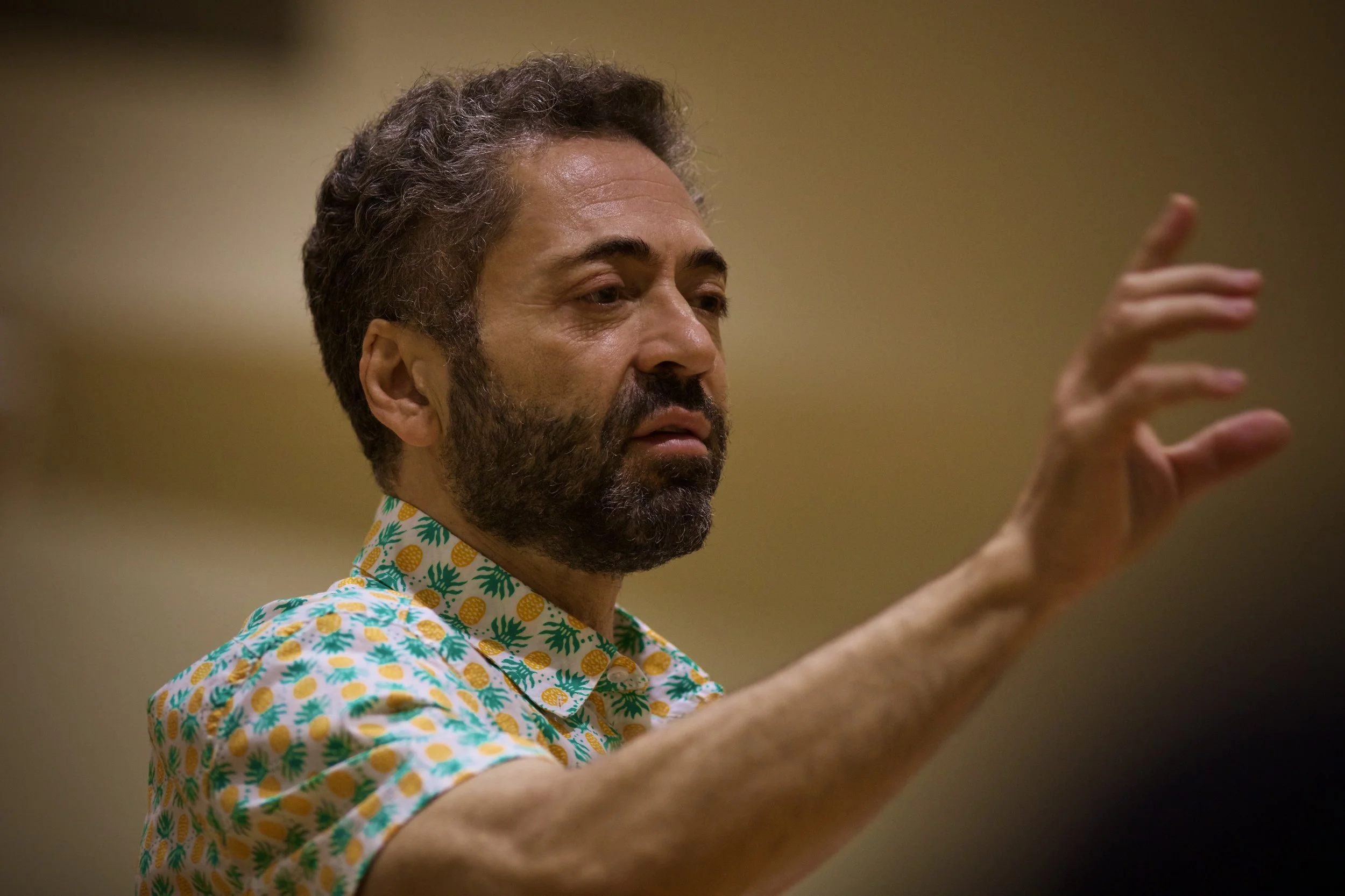
“It’s hard sometimes to describe exactly what I do for a living,” says Jose Maria Condemi, director of Cincinnati Opera’s Salome. “When I say I’m a director, I know for a fact that people assume that I’m a conductor. They wave their hands up in the air as a conductor does because people don’t really know what a director does in opera. They know what a movie director or a theatre director is, but some don’t even know that there’s such a thing as a stage director.”
Condemi describes a struggle that is only unique to those of rare talent: those who do inspiring and impactful work that can’t simply be explained in a few words. As he rightly indicates, most people would struggle to understand what a director does in the world of opera. However, for Condemi, it’s simple. He’s a storyteller. He tells stories through lighting and design choices that highlight and emphasize the ever-moving elements on stage. He tells stories through the singers, their behavior, and their interactions, all to engage the audience and guide its focus to what he wants them to see and experience.
A Childhood Steeped in Curiosity
Growing up in San Andrés de Giles, a small rural town near Buenos Aires, Argentina, Condemi explored abandoned places and imagined the stories that existed in those locations.
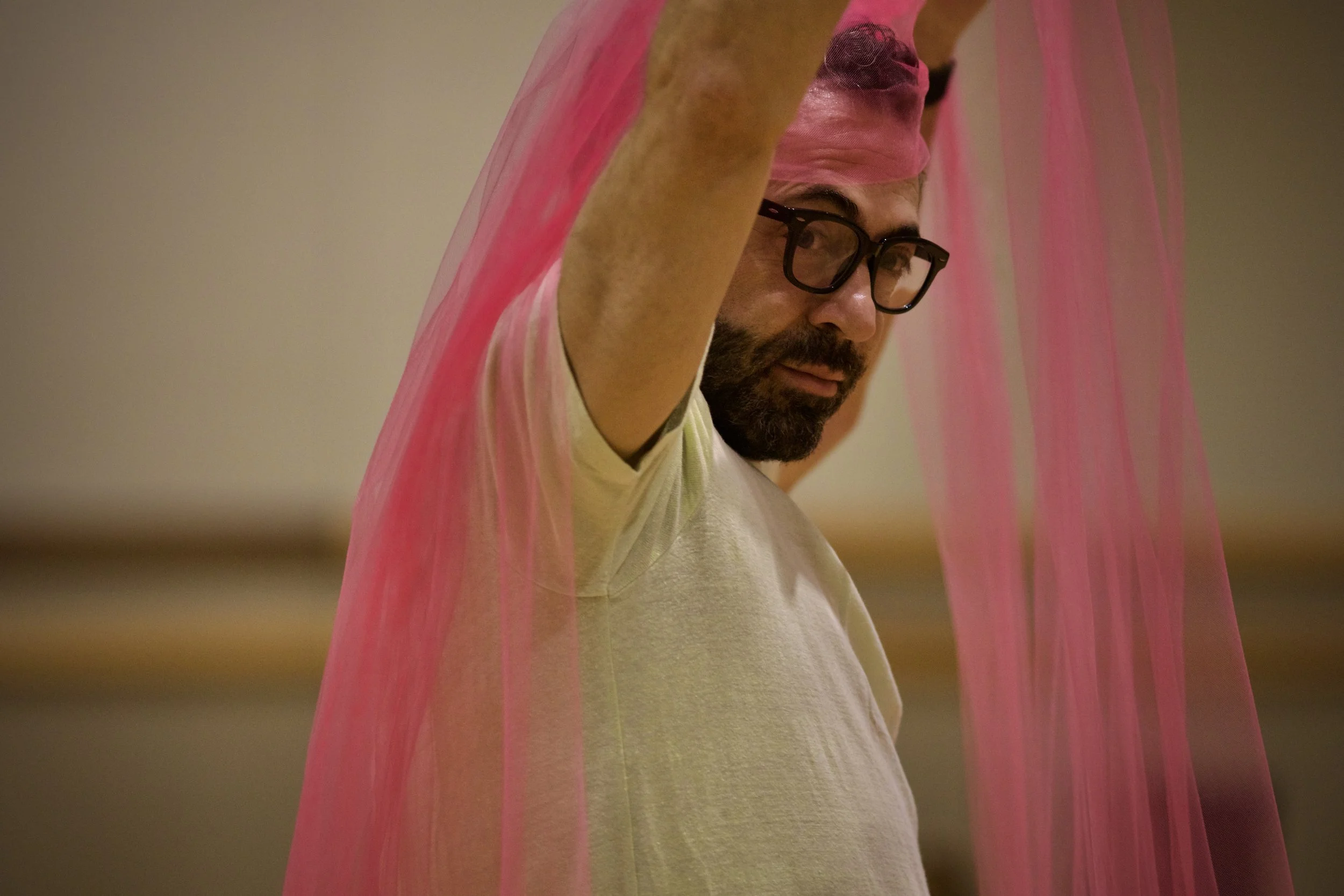
Salome stage director Jose Maria Condemi
Photo: Julius Ahn
“I did that at my grandmother’s house,” said Condemi. "Next door, there was a summer house for a couple that lived somewhere else, so most of the year, it sat empty. I would go exploring there, and I would create all these stories in my mind about what could happen there. When I was a kid, there was a cemetery on the outskirts of town called ‘the old cemetery.’ It was only a cemetery in name because the remains had been moved to a newer cemetery. But the old tombstones were still there, so it looked like a cemetery that had been abandoned. I would go there with my mom and some friends to spend the afternoon there, and I loved it.”
These childhood experiences speak to the evidence of the theatrical mind that Condemi had all along. They also emphasize his curiosity and how much that has been a driving force for him in life. However, he wouldn’t discover this until later, when he changed careers after studying medicine for several years.
“My family roots are in Italy, and my grandparents emigrated to Argentina early in the 20th century,” said Condemi. “My parents are the first generation born in Argentina, and with that family heritage and experience come expectations and an unspoken mandate. When it came to career options, it was either medicine or law. I chose medicine because I did and I still like science. I actually did great in my first three years in medical school, but then, when my curriculum called for me to go into the field, I realized I didn’t have it in me.”
“At the same time,” he continued, “I was developing this attraction for opera. I grew up playing piano, so classical music was part of my childhood, but not opera. Through a friend who was a ballet dancer, I did a Summer course in directing for Opera at the famous Teatro Colón. That led to a real passion for the art form. Eventually, I enrolled in the Teatro Colón Institute and got my undergraduate degree. Around the same time, I obtained Italian citizenship through my grandparents and was pondering a move overseas for more opportunities. That’s when I found the University of Cincinnati College-Conservatory of Music (CCM).”
Artistic Footprint & Journey
Condemi has worked with a variety of respected institutions, including the San Francisco Opera, Lyric Opera of Chicago, Seattle Opera, and Teatro Colón. What has allowed him to leave an indelible mark in these places is the fact that he just keeps doing what he knows how to do well.
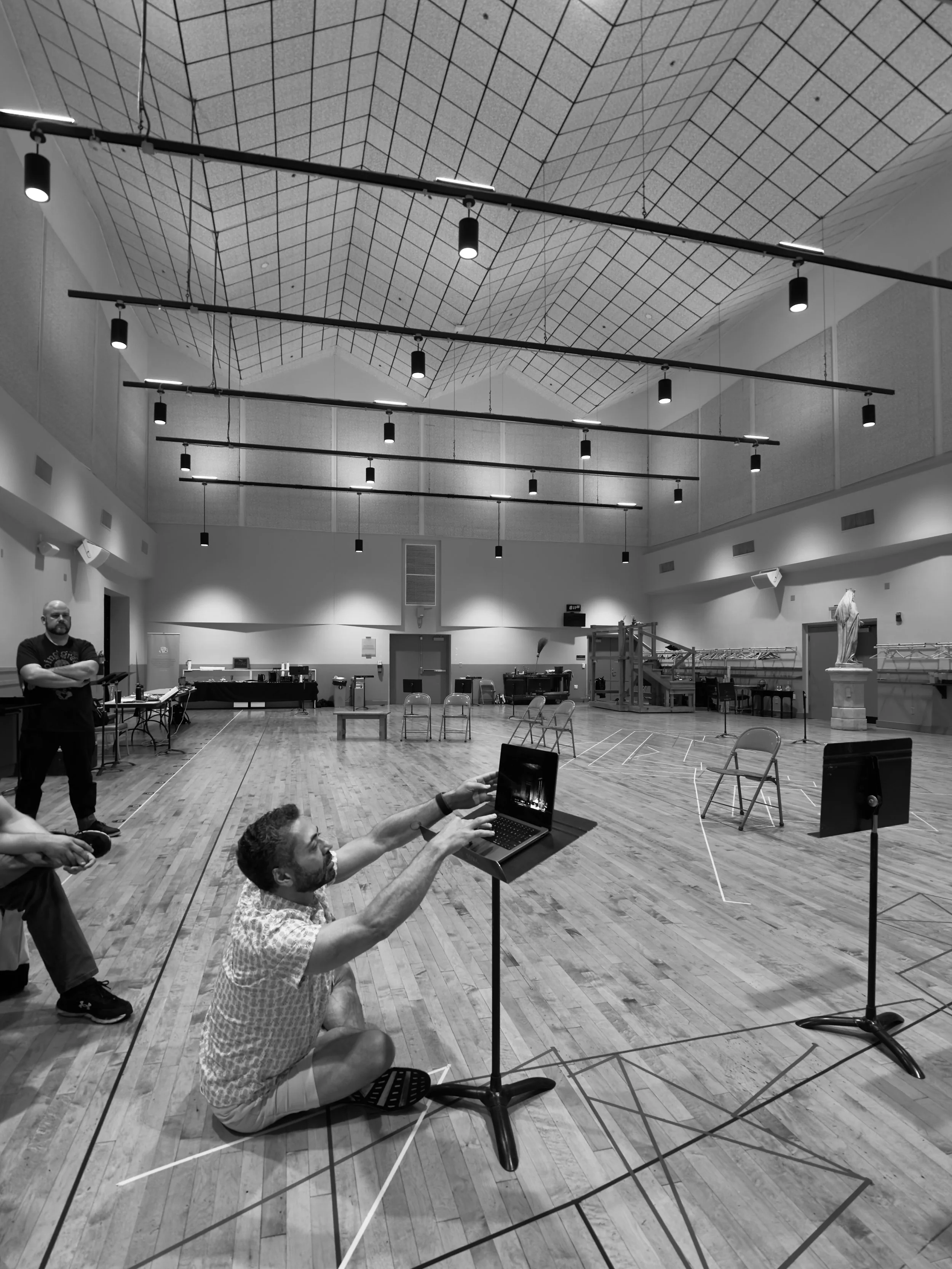
Jose Maria Condemi leads a rehearsal in Music Hall’s May Festival Rehearsal Hall.
Photo: Julius Ahn
“If I start to factor in too many elements, consider too many viewpoints or opinions, oddly enough, it may backfire,” he said. "I know that people go to the theater to be engaged, entertained, moved, and intellectually challenged. I think I trust that more than anything. Each company is different, meaning each ensemble within each company is different. It’s important to have that in mind when you’re directing and working with people.”
A reflection on Condemi’s journey highlights two things: collaboration and curiosity. Two things that he agrees are fundamental not only to his work as an opera director, but also to his ethos as a human being. When it comes to collaboration, Condemi leans on the words of director Anne Bogart, whose work developing and adapting the Viewpoints method for the theatre world Condemi learned at CCM. In an interview, Bogart said that “collaboration” is a word artists like to use frequently. But sometimes it is misunderstood, particularly in the United States. In her opinion, it means disagreement with respect. That’s a guiding light for Condemi.
“At the center of what I do ... is engaging with conflicting viewpoints and addressing topics that may be hard to touch on, but are needed to foster dialogue, challenge thoughts, and widen perspectives. ”
"I think that’s a very powerful distinction, because at the center of what I do—and what anybody does in the performing arts, not just in opera—is engaging with conflicting viewpoints and addressing topics that may be hard to touch on, but are needed to foster dialogue, challenge thoughts, and widen perspectives. Whenever you present a theme that might be challenging, whatever that may be, there's going to be diverging, often heated opinions. In that regard, collaboration shouldn't be merely getting along where we lower our personal opinions, but rather existing in the dialectic tension and working together respectfully while, often, disagreeing.”
His proclivity for curiosity stemming from his childhood—exploring spaces and imagining the stories there—has allowed him to appreciate different facets of opera and the varied experiences that have come with it.
Said Condemi, “I think I would say that I trust the power of opera as an art form. And by that, I mean the basics of it—the sheer power of the amplified human voice, or the scale of it. Even though I do love smaller-scale projects like chamber work, there is something unique about the unamplified human voice in a large opera venue that makes a very discernible experience, cutting through the brain. But the fact that I believe in this primal power of opera doesn’t mean that I don’t apply an intellectual lens to what I do. I think it’s a very special experience to witness the superhuman feat of someone singing over an orchestra without a microphone.”
To Condemi, the survival of human art forms such as opera is down to its engaging element with the human soul and psyche. Audiences are asked to sit down for sometimes three to four hours in a dark space to listen to stories often told in a foreign language they don’t speak or exactly understand. Yet, they show up with intrigue and desire to listen and engage. Condemi speaks on encountering this when he watched the musical, Hadestown.
“So, they do the show, and of course, it is amplified. But after the curtain call, the ensemble sings a song, and they invite the audience to follow along. At first, I thought it was a technical error because the voices sounded underpowered. But then I realized it was by design, and it was brilliant. As an audience member, I found myself leaning forward, connecting not with the characters anymore, but with the performers as human beings. What made that possible was stripping away the amplification—all that was left was the pure, unfiltered human voice. Opera does that all the time”
That element is special and native to the opera space. As long as that connection to the human soul exists, the art form will survive and thrive. The difficulty in describing where art comes from means that it’s always going to be there. Because there’s always going to be a mystery—a mystery that intrigues the human soul.
A Full Circle Moment
Some twenty-something years later, Condemi, who graduated with a Master of Fine Arts (MFA) in Opera Directing from CCM, joins the faculty as associate professor of opera, and for him, it’s more than a full circle moment. It’s an opportunity to give back to his alma mater.
“It means a lot of things,” he said. “I can’t point out the success of my career without mentioning CCM. Directors are hard to train—you really only learn through trial and error. That’s the only way. CCM gave me the space, time, and resources to make those crucial mistakes in a safe environment, as I learned how to become a director.”
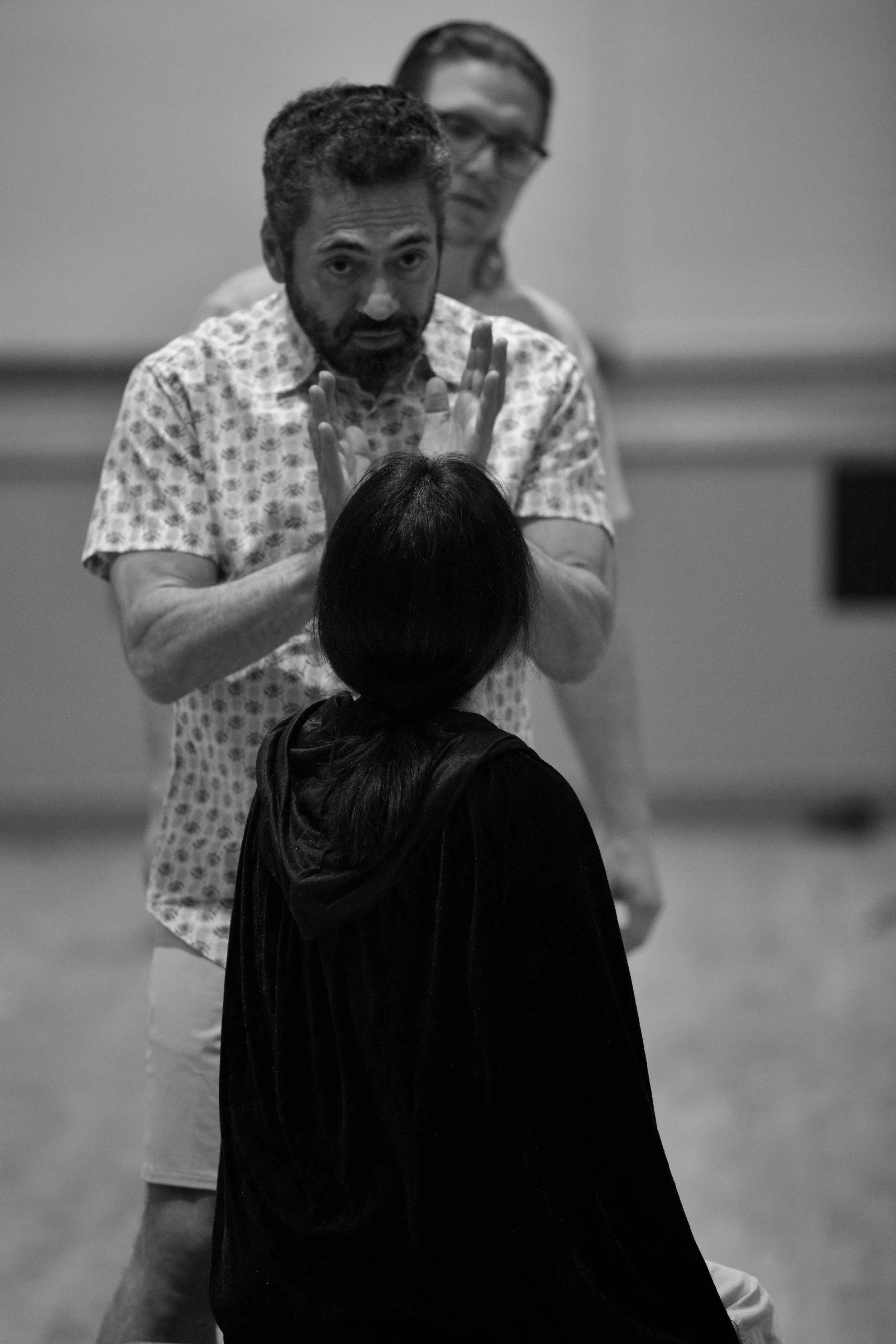
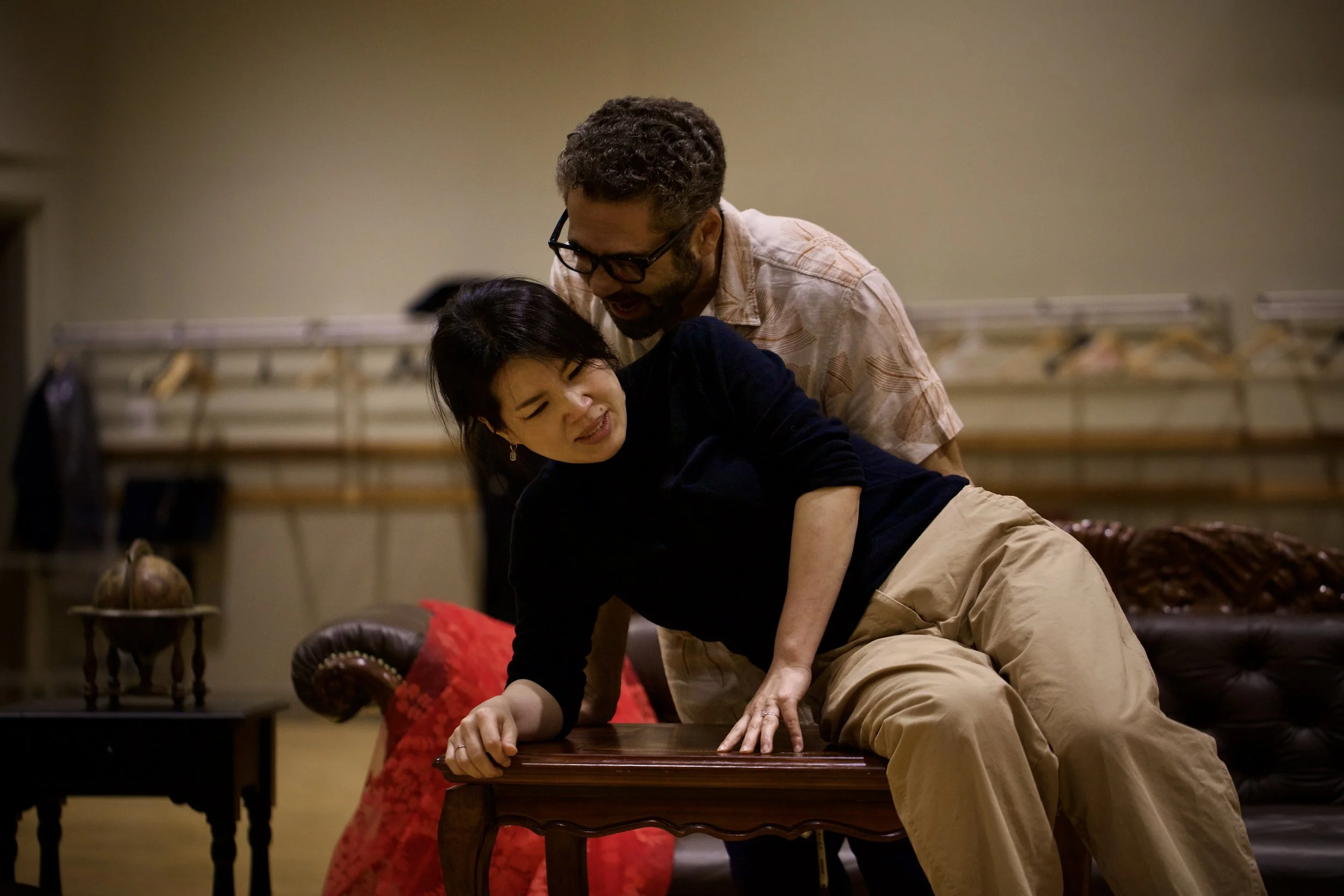
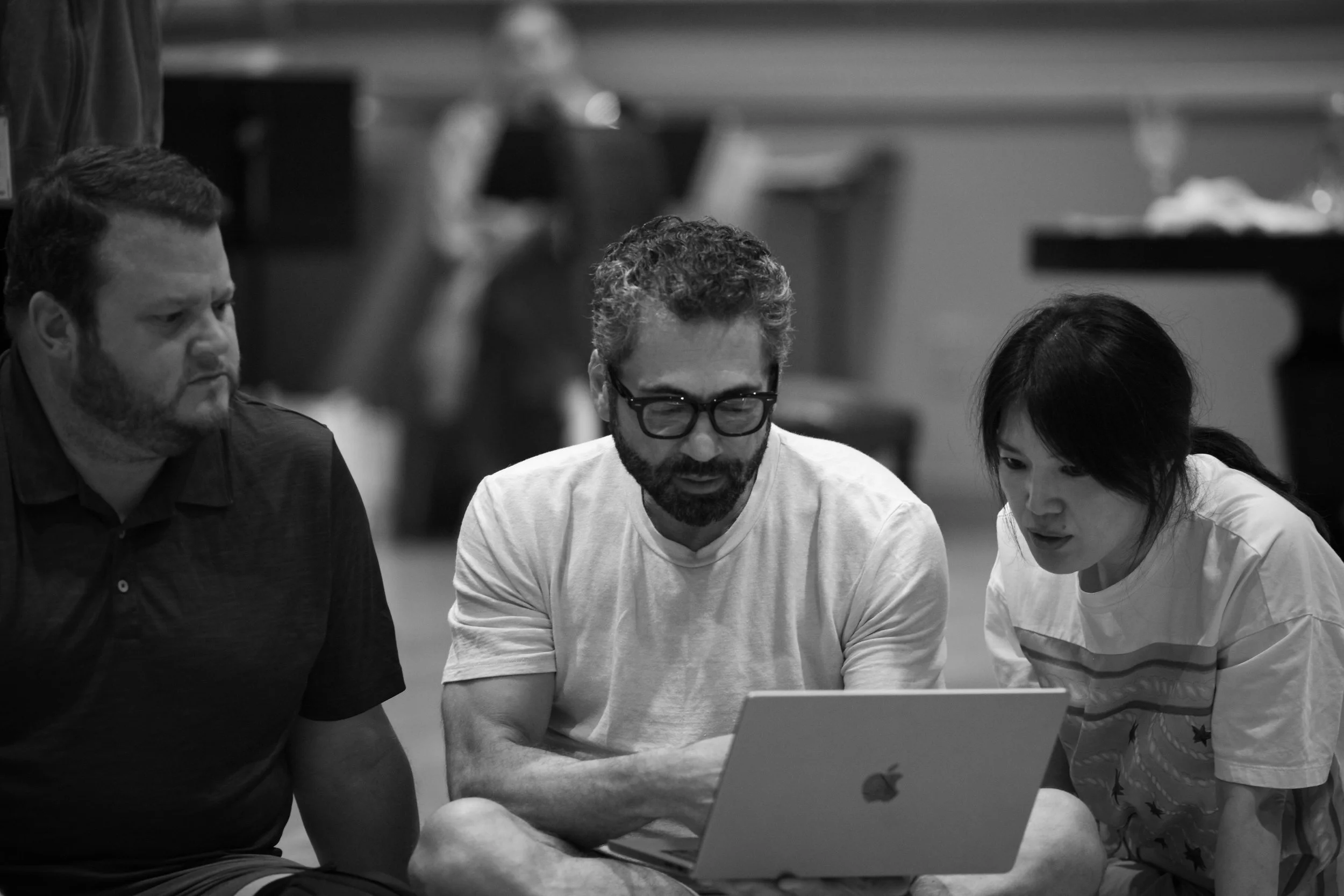
Photos: Julius Ahn
He continued, “To be back there now and on the other side, teaching students is great. I do try to teach the way I was taught, which is by trial and error. And I expect curiosity because I don't think there's any other way to do the job. My goal is for my students to be successful and have long careers in opera, and I believe curiosity and exposure give them the right tools toward that”
With the rapid evolution happening in technology and digital media, the arts are not exempt, and it is certainly a conversation about how educational institutions are preparing students for the direction the real world is moving in. Condemi is aware of this, and he’s tailoring his teaching experience to prepare his students for anything and everything.
“I think this is an amazing time for art, and that includes opera - a time of renaissance and reinvention,” Condemi emphasized. “Much like anything that has been re-energized, there are some things that are fantastic and some things that are not great. But I am all for it. I think we should not make a judgment call because we don't really know how it may end up working.
He continued, “As an instructor, I think my students should learn the traditions of opera and that includes, for example, foreign languages. You cannot really be a committed, successful performer, unless you know what you're saying, which is different from knowing how to pronounce the word. So that has to stay. But at the same time, there's now an expectation of being a strong actor, which wasn't always the case in the past. Cincinnati Opera, for example, is doing more musical theater and hybrid pieces these days”
Salome’s return after 26 Years
Condemi is at the helm as Richard Strauss’s Salome makes a return to Cincinnati Opera after 26 years–a match made in heaven (or hell, given the opera’s themes). His keen eye means that he plans to stay true to the source material while emphasizing moments that can make it more engaging for its audience.
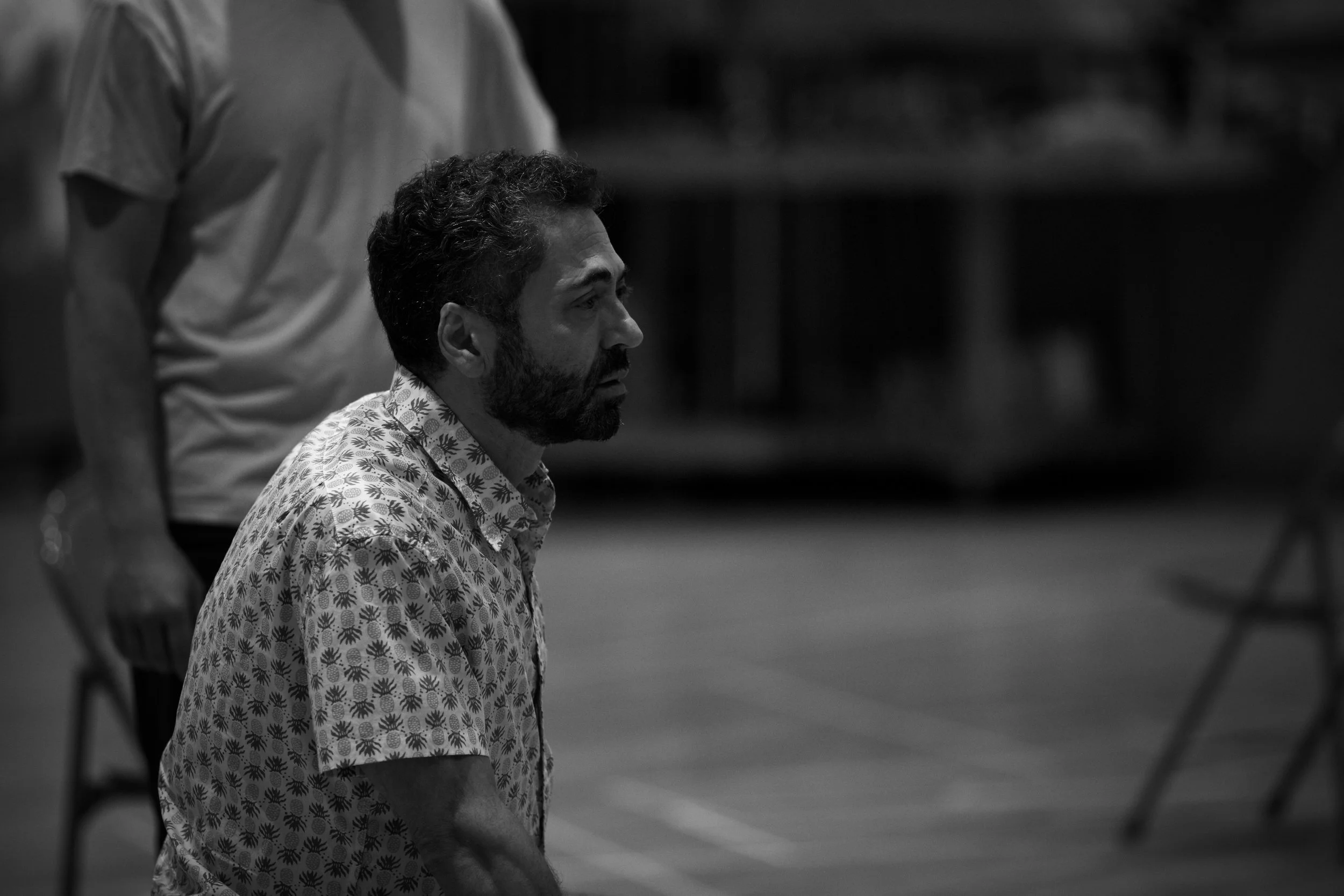
Photo: Julius Ahn
"I like taking the dust off whatever piece I'm staging, to make it feel fresh again. But that doesn't necessarily mean updating the setting—sometimes I do, sometimes I don't. I just trust the material, and look for ways to make it feel vibrant and new each time”
“Herod in the story is abusing his power,” said Condemi, ”and he clearly has the markings of mental illness. I mean, he basically has a breakdown on stage, accompanied by hallucination. That angle of the story is not the central one, but intersected with it is a question: What stops the stepfather from going along with [Salome’s] request to sever the head of a holy man? Well, it's power, right? He has the power to say yes or no. What does he do? For me, that's the tension I want to focus on—without giving too much away. It's something I'm really drawn to, because it reminds you that struggles with power show up everywhere, in every field, and they've been with us throughout human history. That part never changes.”
Condemi also wants the audience to be provoked as they reflect on the parenting in Salome.
He asked, “What happens when your parents raise you in a way that is not ideal? The story shows Salome’s journey as the opera unfolds. But that journey is littered with events that happen as a result of her upbringing. I have a lot of empathy for the character of Salome because I can see what made her. So that parenting aspect is important to me.”
“The other thing for me would be the experience of a full orchestra,” Condemi continued. “The sheer volume of it, its textures, and of course, the superhuman scale of it.”
He’s also very much anticipating an appreciation for the orchestra that will bring the story to life, and Kathryn Lewek, who is set to play the role of Salome.
“The love story of Kathryn Lewek and her lovely husband [tenor Zach Borichevsky, singing the role of Narraboth], which is simply inspiring. They have been journeying around Europe, performing and parenting at the same time. To be singing, as a role debut, one of the most difficult roles in the entire repertoire is simply phenomenal. To me, that is superhuman, and I believe they will rise to those levels, and the audience will get to experience that.”
Richard Strauss’s Salome plays June 18 and 20 at 7:30 p.m. at Cincinnati Music Hall.